
January 12, 2026
|
7
minute read
Why personalised messaging is your most underutilised growth strategy



Introduction
Personalized messaging is going to be one of the most effective growth strategies in 2026. Why? Because customers want to feel seen.
The world as we know it is increasingly leaning into personalization strategies. We are constantly exposed to algorithms designed to cater to our own unique needs, as well as being targeted ads that are aligned with our wants.
As personalization becomes more and more sophisticated, it also becomes more effective. We are moving away from the simple days of including your target recipient’s first name in your email sequences and into a world of deep, thoughtful, and consistent personalized messaging that aligns your goals with your audience’s needs. This level of sophistication has been in part due to the integration of AI personalization tools into broader messaging strategies.
Recent research into personalized messaging supports its effectiveness. A study completed by McKinsey shows that 71% of consumers expect personalized interactions from brands, and 76% get frustrated when they don't receive them.
We also analyzed 30,000 personalized messages from leading retail brands and found some pretty interesting insights.
- Personalized lifecycle messages convert up to 4x better than generic winback campaigns.
- Messages targeting specific product preferences and purchase behaviors generate 2x revenue compared to broad category-based segments.
- The first 30 days after a purchase is the most profitable window for one-to-one communication.
Four key pillars of personalized messaging
While personalized messaging has effective results across many different areas, our research highlighted four key pillars where it was most successful.
Loyalty and value recognition
Your most loyal customers are already repeat buyers, so imagine if you could increase their purchase frequency by just 10%. Small shifts from your highest-value segment often deliver outsized results. That's the Pareto Principle in action: 80% of your revenue likely comes from 20% of your customers. And even if purchase frequency stays flat, recognition builds the kind of loyalty that drives referrals and long-term retention.
Loyalty and value recognition personalization example
- Segment: Customers with high RFM, high CLV, and high AOV.
- Purpose: Show customers you value them with VIP invites and high‑spend recognition.
- Use case: High-value customers who've reached a significant milestone (e.g., $5K+ lifetime spend, 10+ orders, or 2+ years as a customer).
- Example message: "Sarah, I wanted to personally thank you for being with us since day one. Customers like you are the reason we do what we do.”
- Typical results: 15-28% conversion on next purchase, increased customer lifetime value, higher retention rates, and word-of-mouth referrals.
Lifecycle momentum
The second pillar of personalized messaging is lifecycle momentum. Lifecycle momentum is centred around managing and accelerating growth during the customer journey. Within the process of lifecycle momentum, your goal may be for a new customer to become a returning customer or for a returning customer to become a high-value customer. Lifecycle momentum focuses on strategically accelerating growth, and moving away from purchases being one-time sales.
Lifecycle momentum personalization example
- Segment: Customers who’ve purchased items in the previous 7 days.
- Purpose: Proactively check in with customers to increase customer satisfaction and encourage return customers.
- Use case: Customers who purchased items within the past 7 days.
- Example message: "Hi Jessica, just checking in on your new espresso machine. Did it arrive safely? Let me know if you have any questions about set up — happy to help!"
- Typical results: Reduce returns by checking in post-purchase, and a 30-40% drop in support tickets.
Product and preference affinity
The third pillar of personalization is related to a customer’s product preferences. If you are able to accurately advertise a customer’s preferred product, it is statistically probable that you’ll increase that customer’s AOV. Collecting data pertaining to the products and styles that a customer typically purchases will allow you to provide them with updates when similar styles or relevant new products are released.
Product and preference affinity personalization example
- Segment: Recent frequent purchasers of a specific product.
- Purpose: Educate likely-to-convert customers about other similar products or styles.
- Use case: Customers who've purchased similar or the same products 3+ times in 90 days or frequently engage with product content.
- Example message: "Hey Marcus, noticed you're loving the Everyday Bundle. Just wanted to share that our Pro version has the extra features a lot of regular users find game-changing. Thought it might be worth a look!”
- Typical results: 12-18% conversion to premium tier, 35-50% higher average order value, strengthened customer relationship.
Contextual re-engagement
Rather than acquisition or growth, contextual re-engagement focuses on retaining customers who have become disengaged. In particular, this type of engagement should focus on rekindling interest through contextual and empathetic outreach. This ensures that customers feel valued without feeling guilty.
Contextual re-engagement personalization example
- Segment: Customers with recent returns.
- Purpose: Re-engage customers who had disengaged due to product dissatisfaction..
- Use case: Customers who previously purchased and returned a product (reason code: fit, quality, sizing) that has since been improved or relaunched.
- Example message: “You tried our Linen Pant last year — we’ve refined the fit based on your feedback. Here’s early access before it launches publicly.”
- Typical results: 16-12% conversion and 2–3 × higher CTR than standard new-product announcements.
.jpg)
How to build your messaging strategy
Fortunately, building an effective personalized messaging strategy doesn’t have to be hard. Let’s take a look at the four most important steps for crafting a personalization strategy.
Step one: Identify high-value segments
The first step involves analyzing your customer data, so you can understand where the value lies. High-value customers will look different for different brands, but you should be looking for customers who are VIPs, discount seekers, or return purchasers. Once you know who your high-value customers are, segment them in your database.
Not too sure where these customers are or what they look like? No stress – check out our blog on acquiring high-value customers.
Step two: Choose your strategic goals
What are you trying to achieve with your personalization strategy? What are your target outcomes across retention, cross-selling, growth, and reactivation? Before you set up any personalized message campaigns, you need to understand what your goals are.
Have a look at your segmented customers and identify where the patterns are. Is reactivation a key goal for your team, and you have an audience segment of customers who used to be high-value but have disengaged in the past 3 months? This could be the perfect opportunity to hit some of your reactivation KPIs with a thoughtful personalization messaging campaign.
Step three: Set up your messaging sequence
Once your goals have been established, it’s time to set up your messaging sequence. Think carefully about the cadence of your messages and what you’re trying to say. Ensure you stick to your company’s branding, including using the right tone and style.
When it comes to actually setting up the messaging campaign, you should consider using a 1:1 messaging tool to automate this process. This will save you time and resources while ensuring your messages are sent out accurately and on time.
Step four: Launch and measure
It’s go time! Launch your personalized campaign and ensure you are measuring the results with an integrated reporting tool. Reviewing open rates and conversion metrics will allow you to learn from the campaign’s performance and iterate future campaigns.
Top tips for messages that actually convert
While we were analyzing the 30,000 personalized messages, we recognized a few similarities across high-performing messages.
Recognition beats discounts
Firstly, it became apparent that when it comes to high-value customers, recognition outperforms discounts. These customers are more likely to respond positively to recognition than they are to deeper discounts. You should build campaigns that acknowledge and reward loyalty and VIP status.
Recency drives intent
Recent purchases build a natural momentum that helps continue the customer journey. Segment your audience into those who have made recent purchases, and build a 7, 14, and 30-day messaging triggers to encourage customers to return.
Familiarity builds confidence
The most effective outcomes from personalization come from when your customers feel like you know them. In your messaging sequence, you should reference recent purchases that the customer has made, including favourite products, styles, and sizes.
Emotion wins over price
Another interesting finding was how frequently emotion outperformed price. Empathetic and emotionally engaged messages were much more likely to lead to ideal outcomes than messages that prioritized discounts.
Scaling personalization with a CDXP
Often, the biggest barrier to personalized messaging is execution. Manually crafting individual messages for hundreds or thousands of customers isn’t sustainable, and fragmented data across multiplied systems makes true personalization extremely difficult.
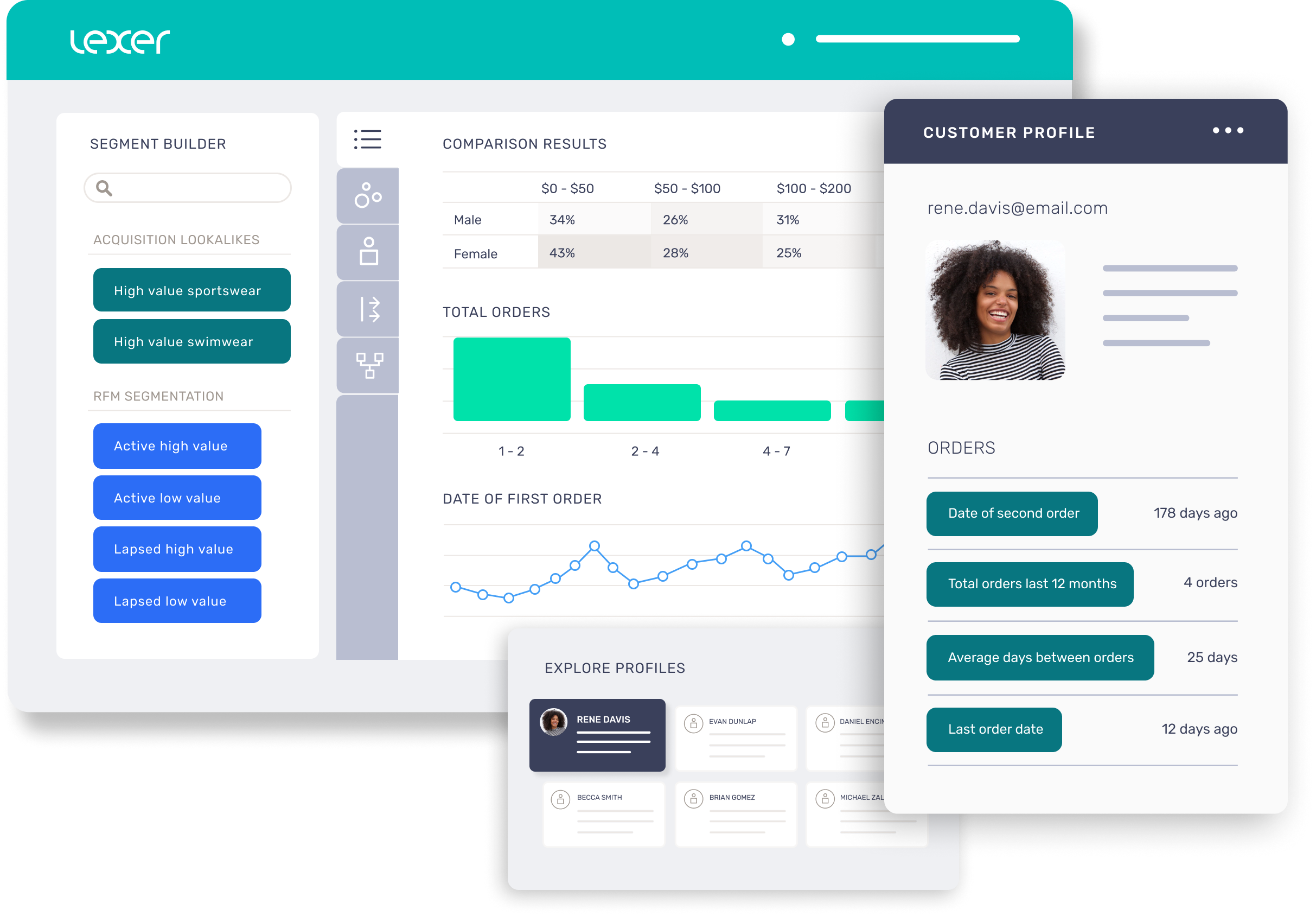
This is where a Customer Data Experience Platform (CDXP) becomes essential. A CDXP like Lexer unified customer data from every touchpoint into a single, actionable view of each customer. This enables you to spot behavioral patterns, segment intelligently, and automate personalization without losing your unique human touch. And even more importantly, it saves you a ton of time. With the right tool, thoughtful personalization can be a part of anyone’s strategy.
Ready to transform your messaging strategy? Book a demo today.