
Lexi's semantic layer describes what every field, metric and rule in your data means. The same question gets the same answer, whoever asks it and however they phrase it.
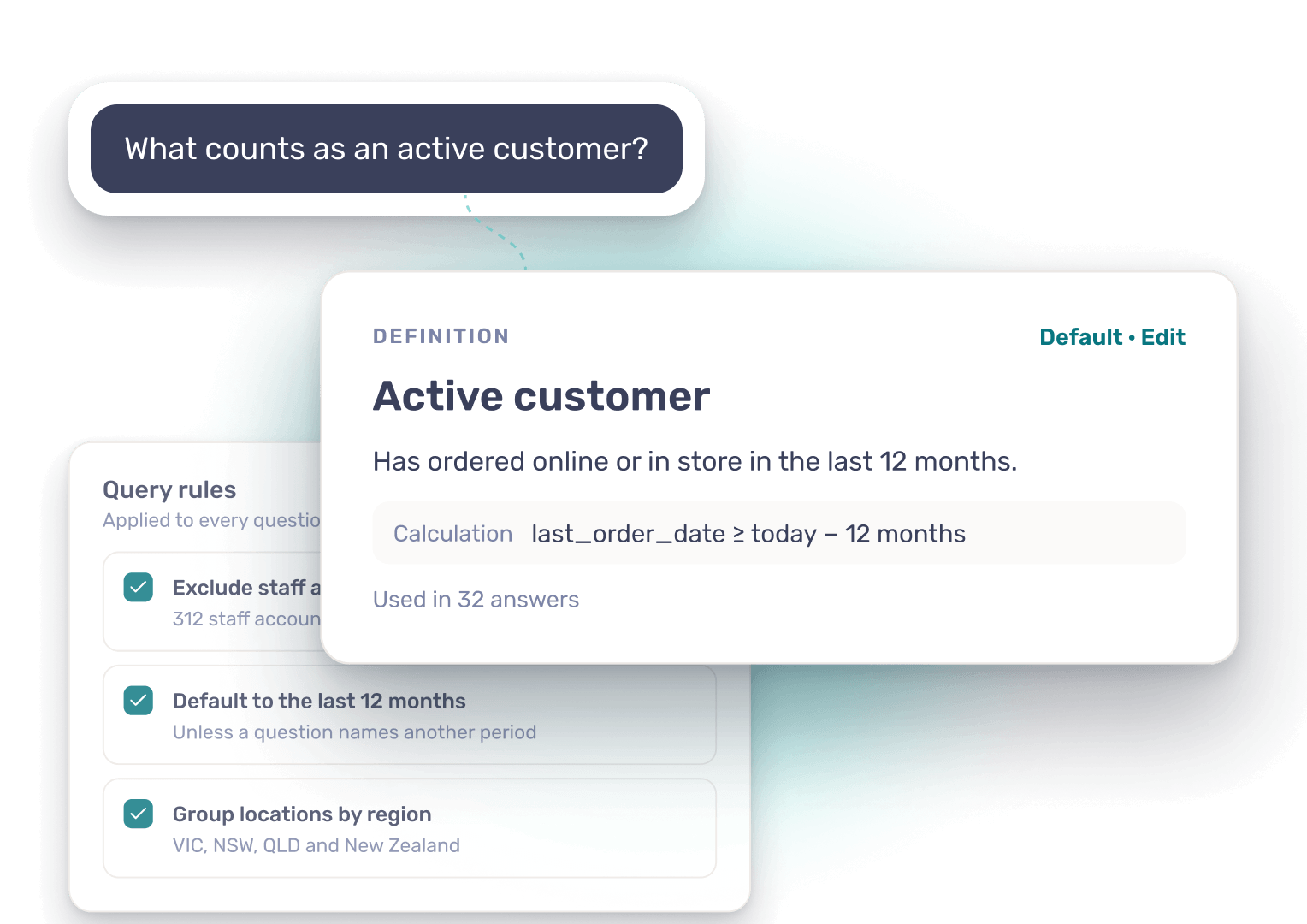
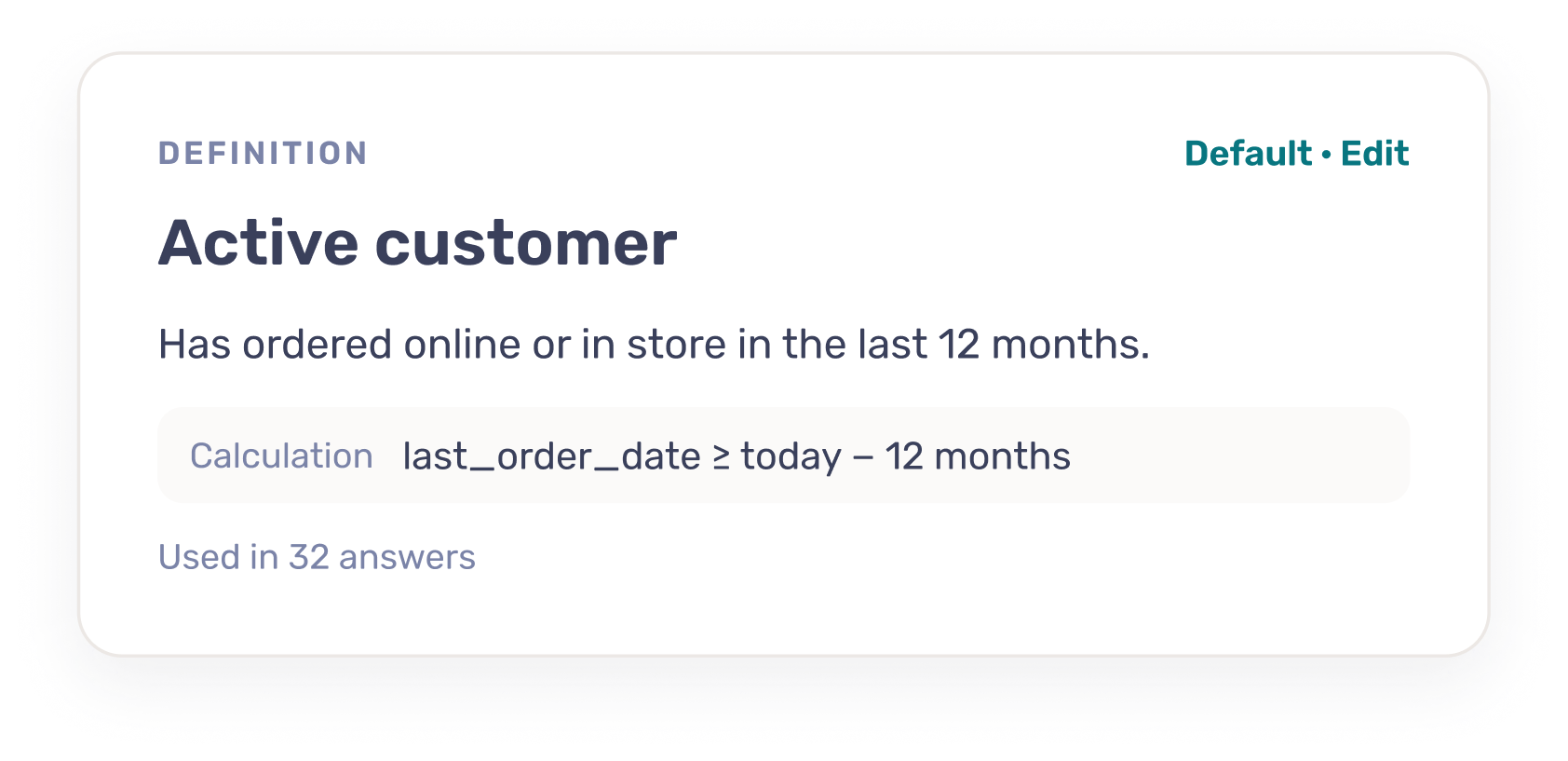
Each metric and field, from revenue to repeat customer, carries a plain-language description and a governed calculation. Lexi reads your data the way your analysts do.
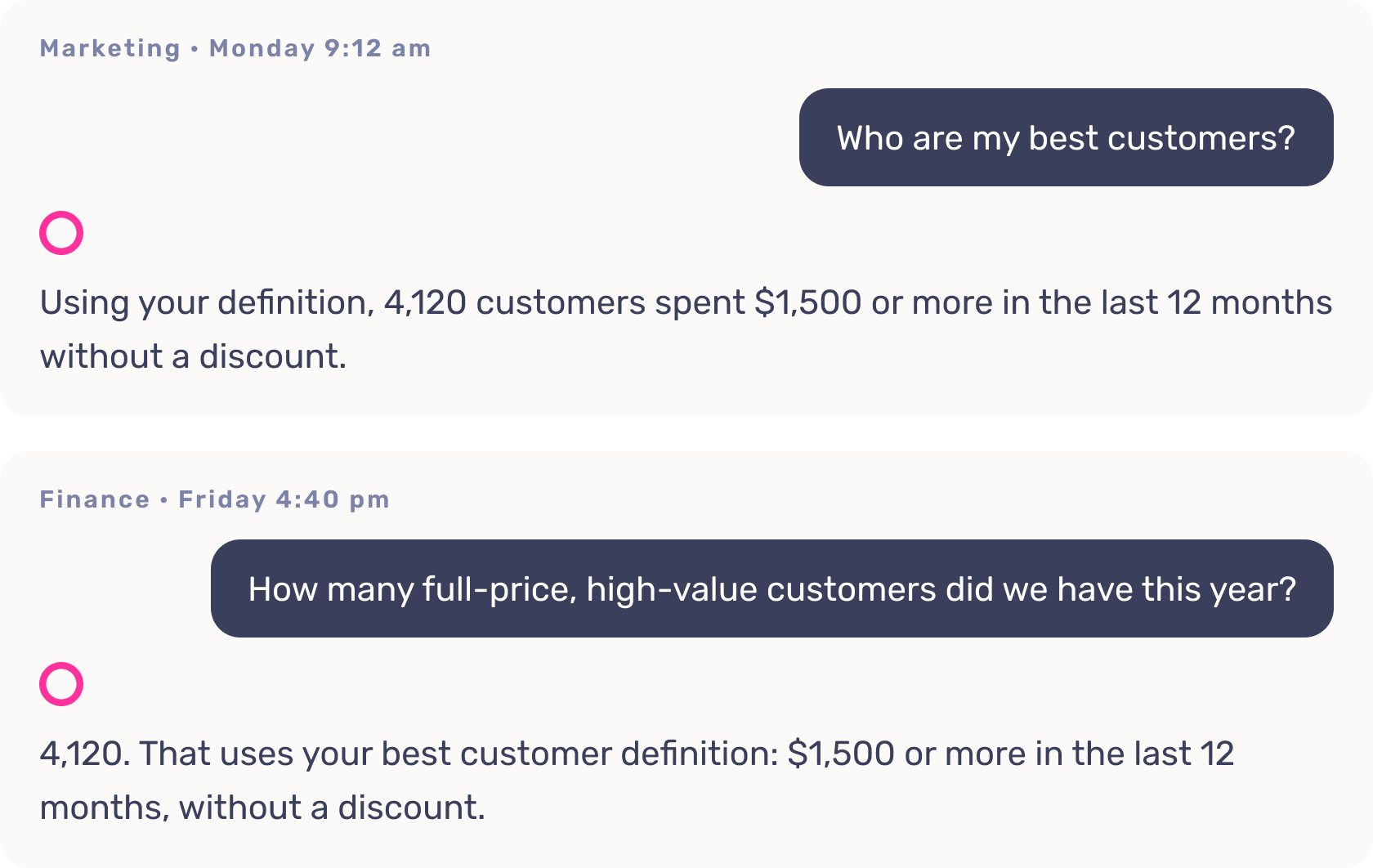
Lexi queries governed metrics instead of writing its own SQL. Ask on Monday or Friday, in marketing or finance, and the numbers match.
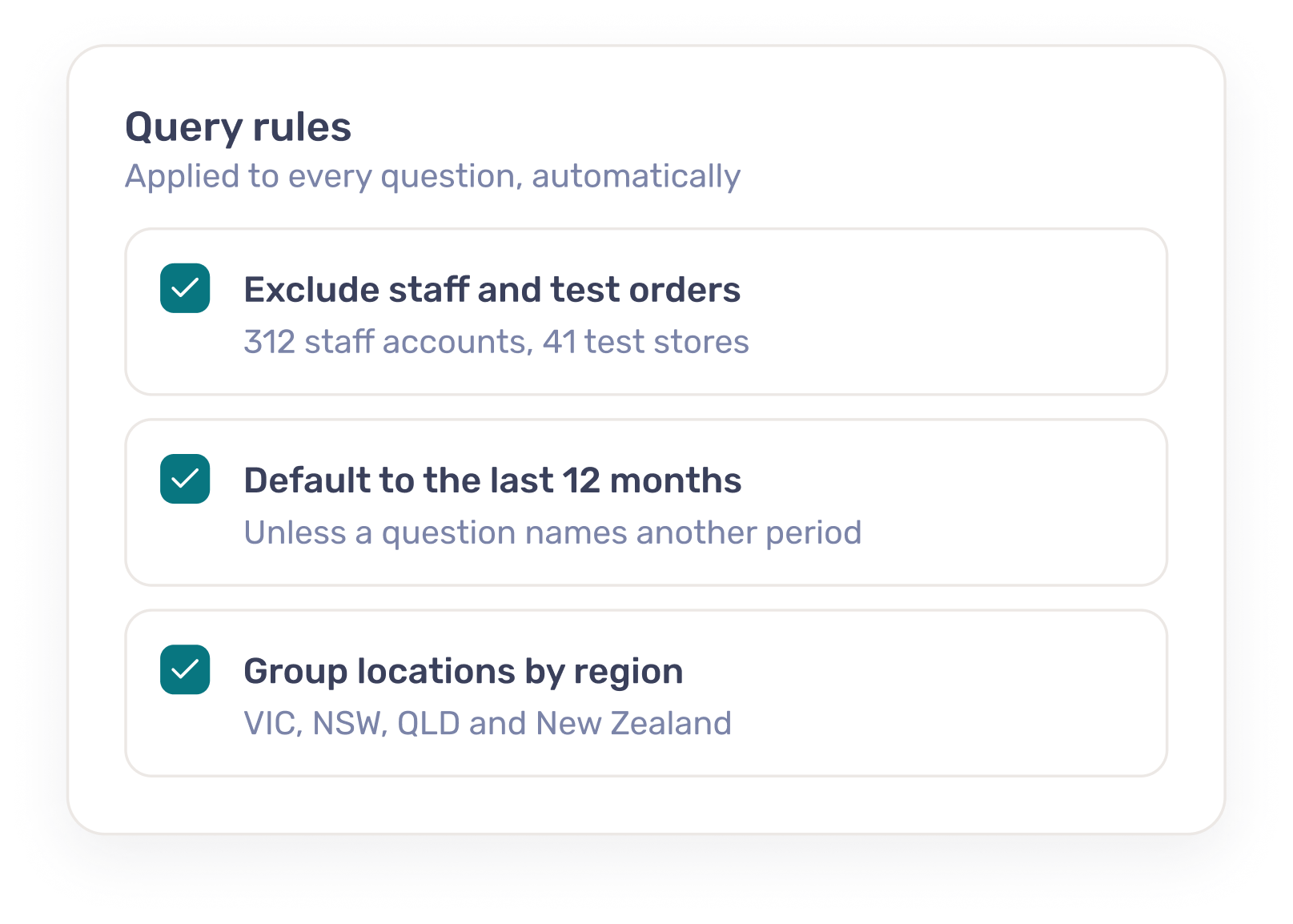
Default time windows, staff exclusions and location groupings live in the layer, so every question follows them without anyone having to remember.
A semantic layer sits between raw data and the people or AI asking questions of it. Without one, an AI model guesses what 'new customer' or 'active' means, differently each time. With one, every answer uses the same governed definitions.
Metrics Governed calculations for revenue, margin, average transaction value, frequency and lifetime value
Definitions Plain-language descriptions for every field and metric
Query rules Default windows, filters and exclusions applied to every question
Customer model Built around transactions, products, locations, channels and loyalty
Safe querying Lexi uses validated metrics and never runs raw SQL on your data
It's a layer of definitions between your raw data and anyone asking questions of it. It tells Lexi what each field and metric means and how to calculate it.
Without it, an AI model invents its own definitions for terms like 'active customer'. That's how you get fast answers that don't match your reports.
No. Lexi ships with a semantic layer for customer data, with models proven in retail and hospitality, and Lexer's team tailors it to your data during onboarding.
The semantic layer describes your data. The knowledge base holds your business context, such as what a VIP means to you and how your trading calendar runs. Lexi uses both.

Book a demo with Lexer
30 min • Video call • No commitment required
Loading available times…