
Data sources · Experian enrichment
Experian enrichment adds demographic, household and lifestyle detail to the customer profiles you already have in Lexi, ready to use in answers, segments and campaigns.
01 · Your data
Ecommerce, POS, loyalty, email and SMS
02 · Added data · You're here
Datasets matched onto your customers
03 · One profile
Identity resolution and the semantic layer
04 · Lexi in action
Answers, segments and activations
Data partner
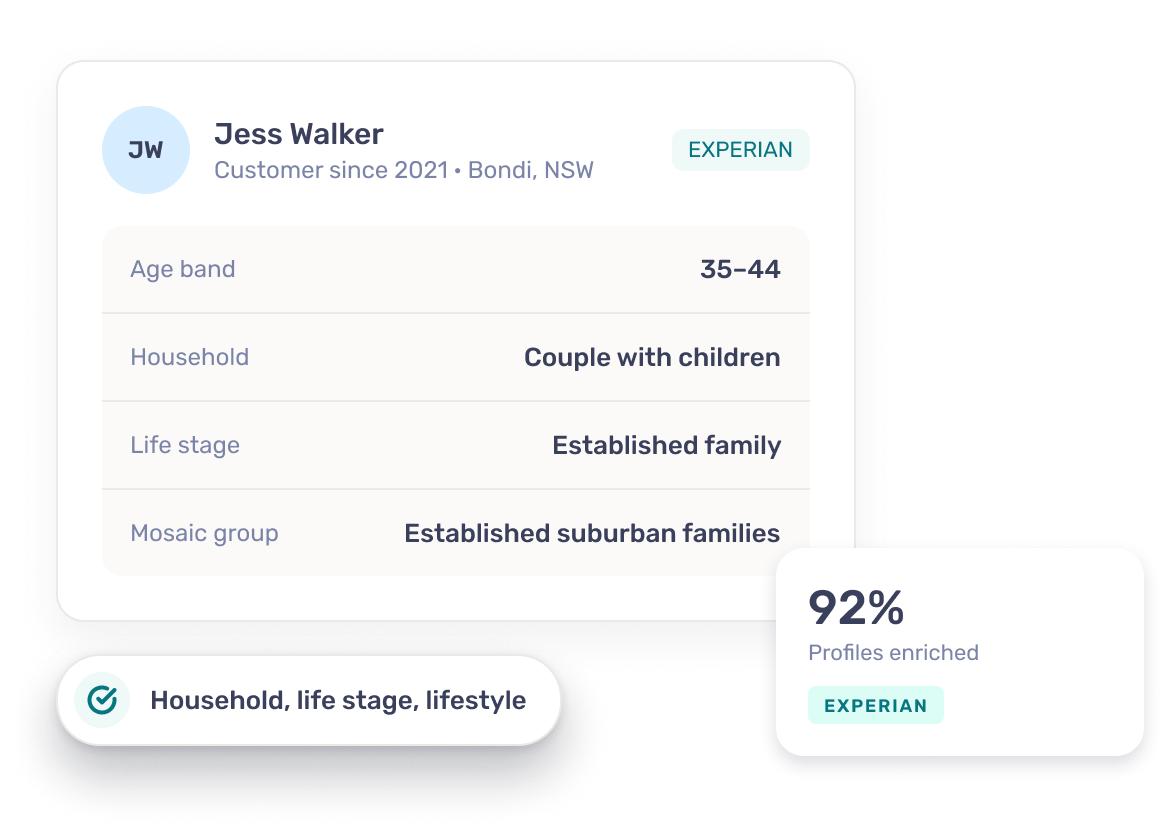
What it adds
Most customer records hold a name, an email and an order history. Experian adds household make-up, life stage and lifestyle, so you can see the people behind the transactions.
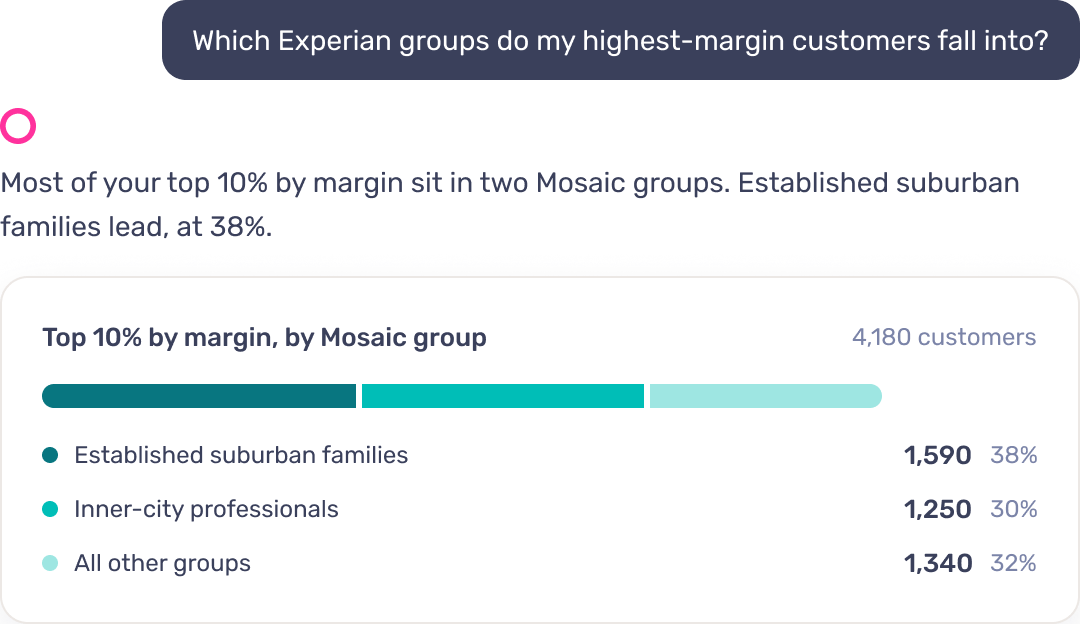
See which Experian groups your highest-margin customers fall into, then build lookalike audiences around those traits. Your acquisition budget goes to people who look like the customers worth having.
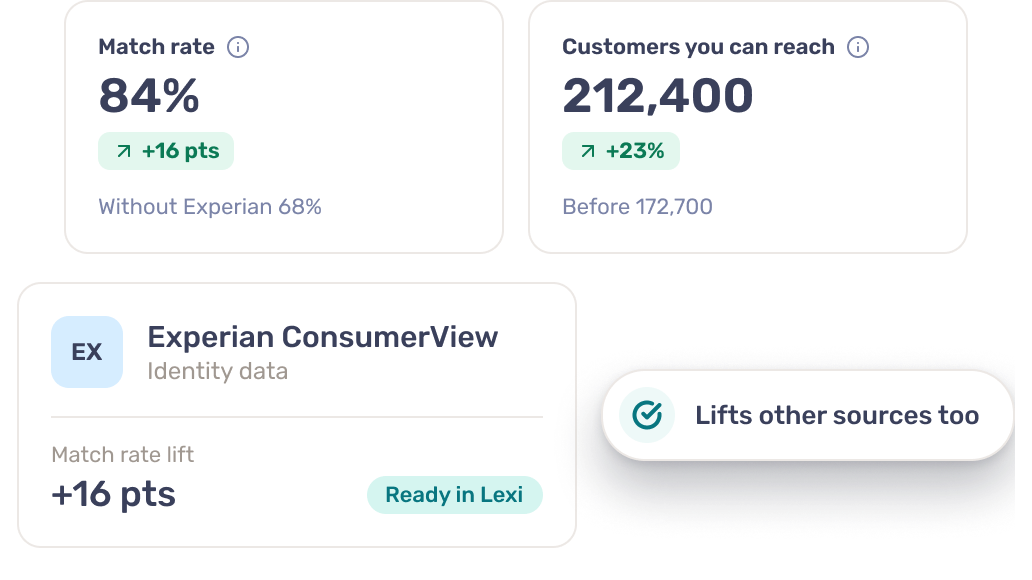
Experian's identity data links records that would otherwise sit apart. More of your customers can be enriched, segmented and reached, and match rates rise when you add other data sources.
Coverage and privacy
Experian enrichment is native to Lexi, so attributes land on matched customer profiles with no separate data project.
Coverage Australia (Mosaic and ConsumerView) and the United States.
Refresh
Matching
Privacy
SOC 2 certified, GDPR and CCPA compliant
Your data never leaves the platform
Approvals before anything goes live
Every action logged and reversible
Demographic, household and lifestyle attributes, including Experian Mosaic groups.
Yes. They sit on the customer profile like any other field, so you can ask Lexi about them, build segments with them and send those segments to your channels.