
Data sources · De-identified retail data
De-identified retail data adds propensity signals, such as return rate and discount affinity, drawn from Lexi retailers who have opted in to share them.
01 · Your data
Ecommerce, POS, loyalty, email and SMS
02 · Added data · You're here
Datasets matched onto your customers
03 · One profile
Identity resolution and the semantic layer
04 · Lexi in action
Answers, segments and activations
What it adds
A first-time buyer has one order in your data, which says little about what comes next. Propensity signals give you a likely read on their habits early, so your welcome journey fits them from the start.
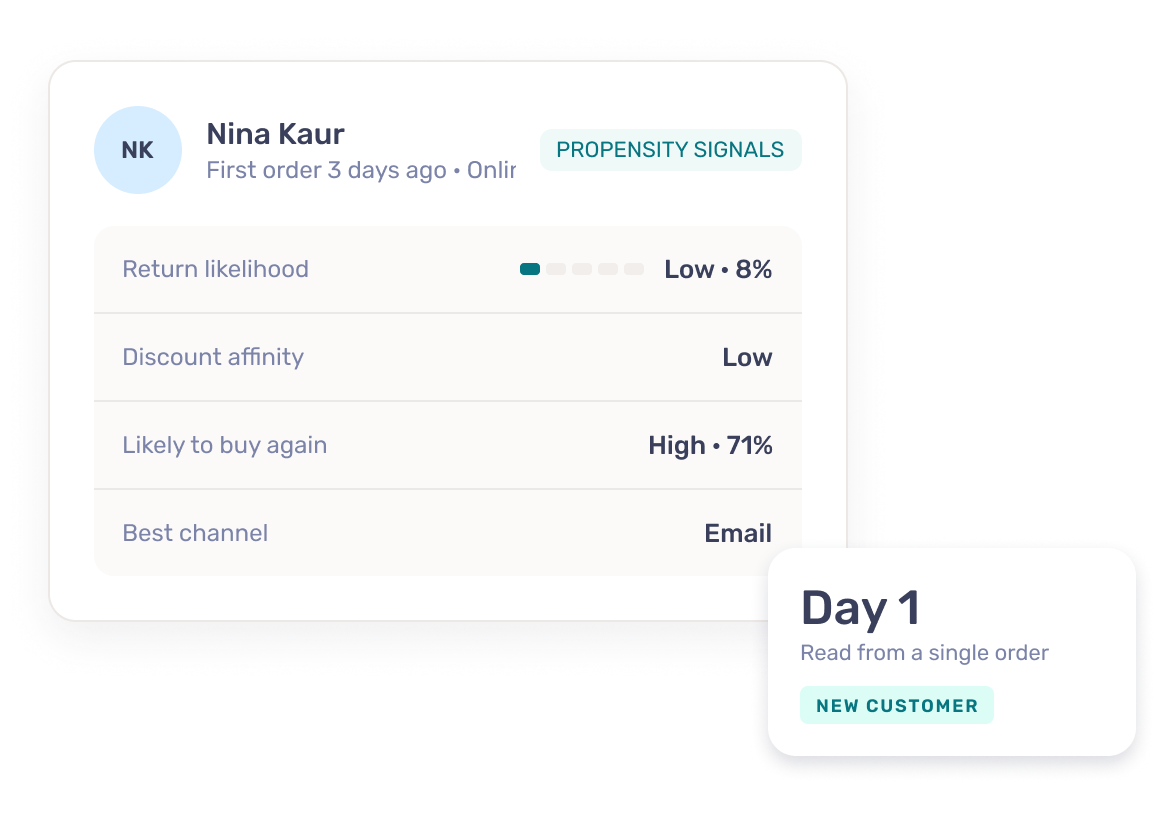
Spot customers likely to return a lot or wait for a sale before it shows in your margin. Save your deepest offers for the people who need a nudge, and keep full-price buyers at full price.
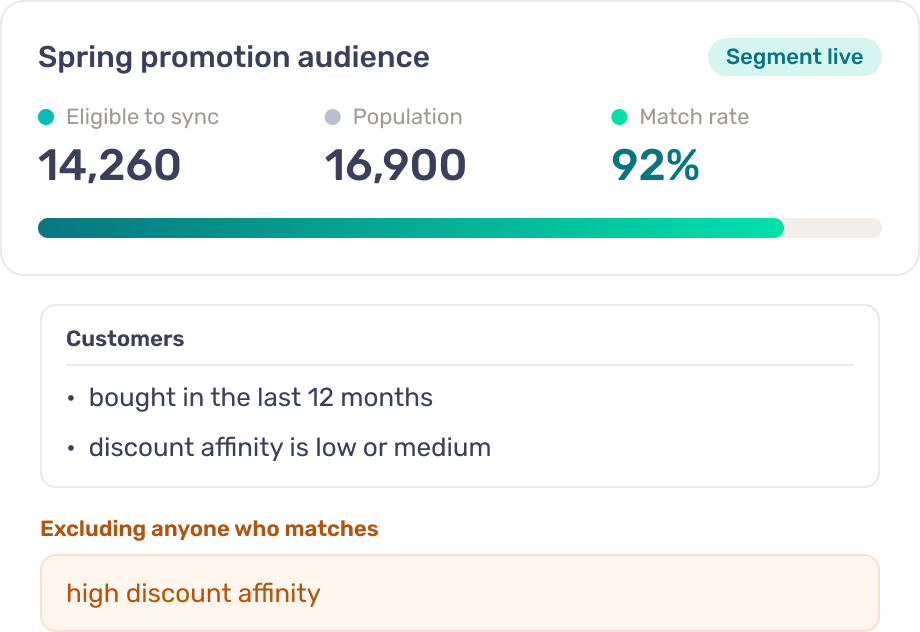
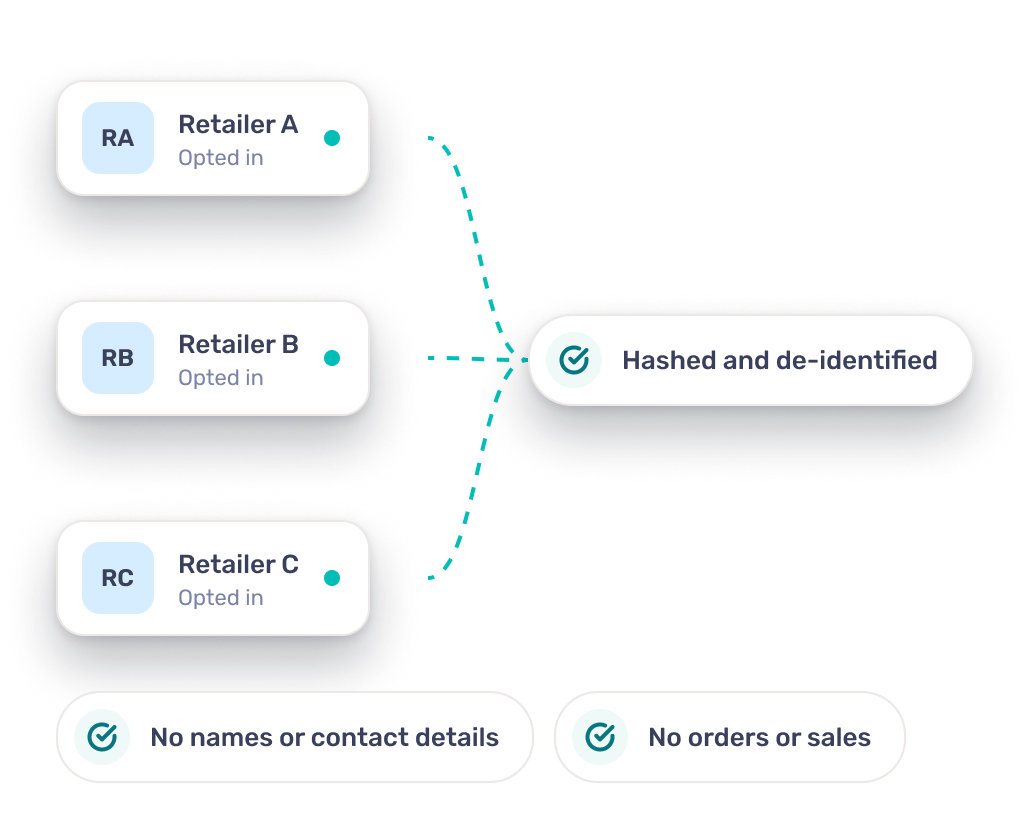
Signals come only from retailers who have opted in, and they're hashed and de-identified before they're pooled. No retailer can see another's customers, orders or sales.
Coverage and privacy
Each contributing retailer's data is hashed and reduced to propensity signals before it's pooled. No names, contact details or transactions are shared, and your own customer data stays in your workspace.
Coverage Signals from around 20 contributing retailers.
Refresh
Matching One-way hashed identifiers.
Privacy Opt-in retailers only. Hashed and de-identified before pooling.
SOC 2 certified, GDPR and CCPA compliant
Your data never leaves the platform
Approvals before anything goes live
Every action logged and reversible
Propensity signals such as return rate and discount affinity.
From Lexi retailers who have agreed to contribute de-identified signals. Contributors aren't named, and none can see another's data.