
February 13, 2025
|
2
minute read
Why customer lifecycle attribution matters




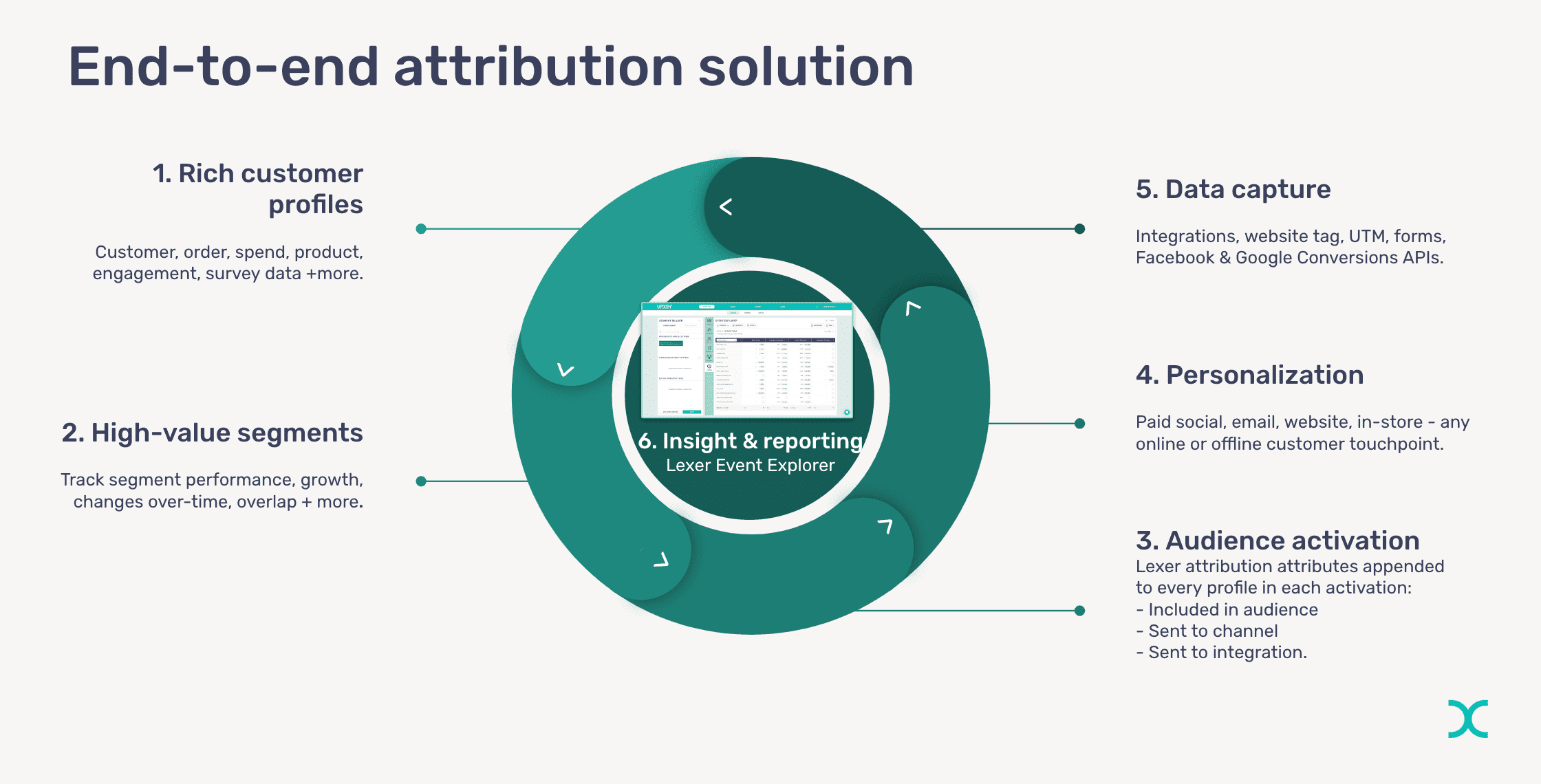
Today, brands need more than just marketing attribution—they need customer lifecycle attribution to understand the entire customer journey from first touch to long-term loyalty. While most attribution tools provide insights into paid media performance, Lexer delivers a complete view of the customer experience, ensuring every engagement is measured, optimized, and activated for growth.
A holistic approach to attribution
Unlike traditional ad-centric attribution models, customer lifecycle attribution connects the dots between:
✅ Acquisition – Which channels drive high-value customers?
✅ Engagement – Which content influences conversions?
✅ Purchase – What factors lead to conversion?
✅ Post-purchase – Which retention strategies drive repeat purchases?
✅ Lifetime value (LTV) – How can brands maximize revenue over a customer’s lifetime?
Customer lifecycle attribution
Acquisition
- Track multi-channel touchpoints (ads, organic, direct).
- Attribution tools focus on paid media attribution.
Engagement
- Website behavior, email opens/clicks, and in-store interactions.
- Attribution tools have limited tracking beyond ad spend.
Purchase
- Capture customer purchases from all channels (website, app, in-store).
- Attribution tools attribute purchases to marketing spend.
Post-purchase
- Measures retention strategies (reviews, SMS, loyalty, CRM data).
- Attribution tools have little to no retention tracking.
Lifetime value (LTV)
- Track repeat purchases, churn risk, and predicted spend.
- Attribution tools do not offer LTV attribution.
.webp)
Lifecycle attribution in action
Scenario: An omni-channel fashion retailer
1. Awareness and acquisition - A customer clicks a paid Facebook ad and visits the website.
2. Engagement and consideration - The customer browses sneakers but doesn’t buy, they do join the email marketing list.
3. Conversion and purchase - The customer receives an abandoned cart email and later purchases via an organic search.
4. Post-purchase engagement - The customer leaves a review, then receives an SMS discount for loyalty.
5. Omni-channel retention - The customer buys again three months later in person at a retail store.
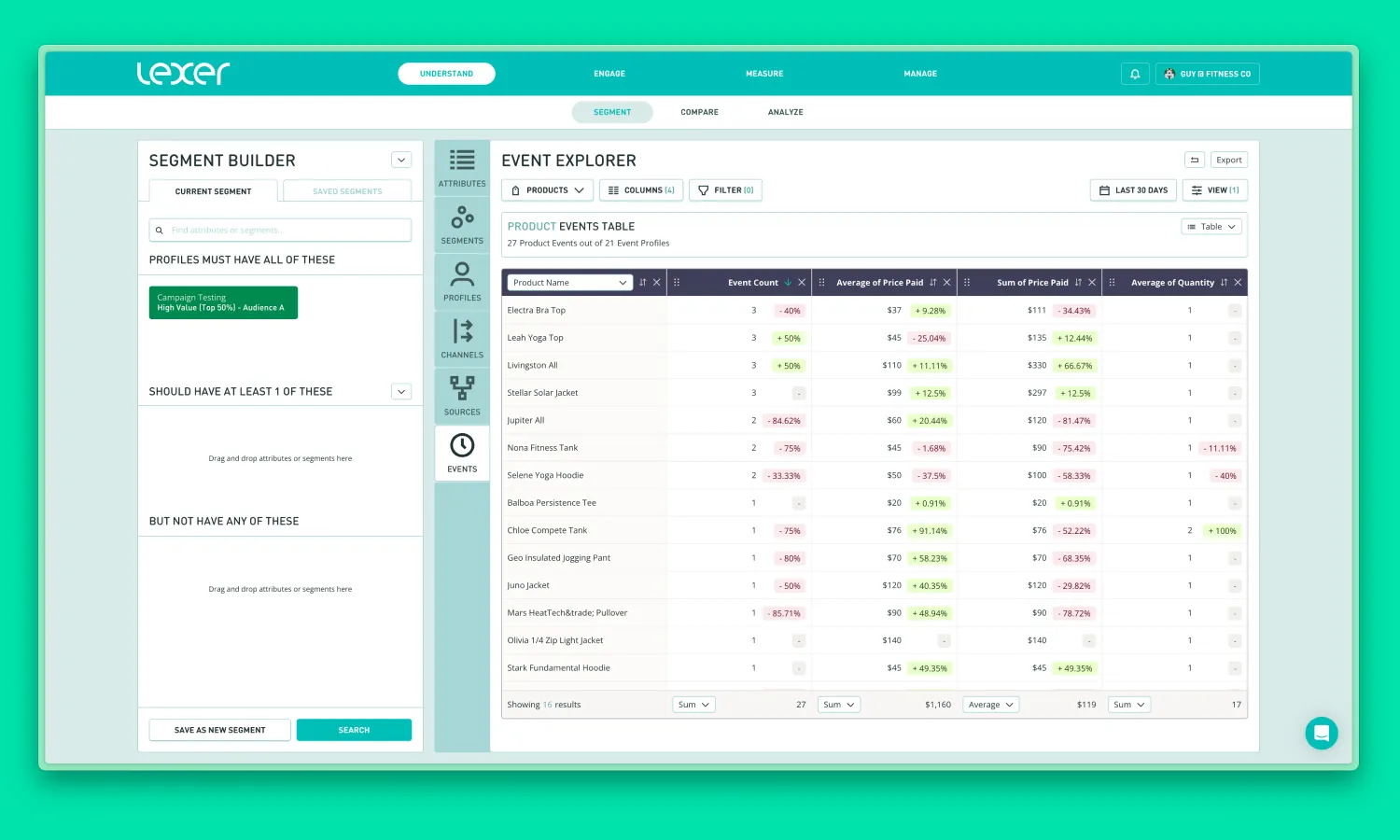
6. Lifetime value analysis - Recognises the first online purchase, the second in-store purchase, email engagement, total spend, product categories, updates predicted spend, predicted product, and recalculates churn risk score.
Why customer lifecycle attribution wins
- Full-funnel measurement – Not just ad conversions, but real customer behavior.
- Retention & loyalty insights – Understand what keeps customers coming back.
- Actionable personalization – Segment and activate customer data across owned & paid channels.
- LTV-driven marketing – Shift from one-time conversions to sustainable revenue growth.
While attribution tools offer valuable media attribution insights, they fail to capture the full customer journey. A CDP can help provide a complete view of customer behavior, helping brands optimize marketing spend while maximizing long-term customer value.
Ready to go beyond marketing attribution? Lexer helps brands grow with data-driven customer insights, lifecycle attribution, and real-time activation. Book a demo to learn how Lexer can transform your marketing strategy today.